About Me

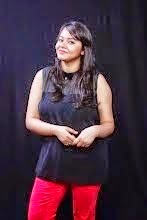
My photo
Hello folks. I am Priyanka and you are on my blog right now (which makes me super happy)! I work as a senior fashion journalist with the biggest newspaper in the country and this blog allows me to voice my ever-elusive love for everything fashionable and beautiful in life (in my free time that is). It all started while I was studying literature during my graduation, I realised how much I enjoy writing; which led me thinking, journalism would be my perfect career match. I started off with internships at fashion magazines and newspapers and developed a flair for lifestyle writing. My love for fashion, beauty, style and trends, food, et cetera only increased by leaps and bounds after I enrolled for my masters in journalism. And since then I have been meaning to have my very own blog, wherein I could share my insights and connect with like minded readers!
Showing posts with label handwoven. Show all posts

Monday, July 14, 2014

Replicating Society--Designer Urvashi Kaur believes, fashion is nothing but a mirror to the society, reflecting its nuances in the most honest way


Urvashi Kaur (center)
Fashion designer Urvashi Kaur is known for her sharp interest in various types of fabrics and colours. She yearns to harvest fresh ideas pertaining to the present socio, economic and cultural status of the contemporary society through her designs. She thrives on the zest to constantly experiment with different facets of fashion by bending genres; and the final outcomes are always enthralling.

Motivated to revitalize the country’s effervescent textiles, Kaur blends the spheres of ethnic with the modern, which leads her to earn critical applause and a venerated league of clientele for her designs. She is also known for developing relationships with many NGO’s by generating and offering employment opportunities to women and endorsing the improvement of handloom fabrics.

What inspires your designs?
My last collection, titled 'Semah' has been inspired by the three unified states of human nature — the mind (as knowledge and thought), the heart (through the expression of feelings, poetry and music) and the body (by activating life). It is Sufi in its deepest of essence.  

What is your design philosophy?
My design beliefs are all about thinking globally but acting locally.

What does your creation reflect?
My creations in this collection reflect the Sufi traditions across the globe through its art and culture. 

What new techniques and materials are you using?
The techniques in this collection involve engineered placements of twisted tie/dye that evoke Bandhej. Mosaic styled geometric patterns derived by hand block prints paired with pleating techniques also surfaced in my work. I have also used shell buttons and wooden beads on the versatile separates with touches of volume and movement in drapes that set a dramatic rhythm.

What does fashion mean to you?
Fashion to me means evoking a sense of simplicity and still being stylishly smart that catches the eye without trying too hard. My collections could be worn by anybody as it has fluidity, movement and ease in it. 

How has the Indian fashion industry shaped your outlook towards fashion?
More than the fashion industry, it is the indigenous handlooms, weaves and textiles of India that have inspired me, along with numerous techniques that find expression in our traditional costumes such as hand tucking, rouching, tie and dye, block printing etc. The silhouettes in my collection are also inspired from Indian traditional silhouettes but have been modified for a more universal market.


What’s in the pipeline for your fans?
Many prominent online collaborations such as ‘Pernia’s pop up’ and tie ups with new stores in India and abroad such as ‘anthropology’ are in the pipeline for my fans .The brand is increasing its presence pan-India as well as in the international daises like in Japan and the US. We are also increasing our presence in the Middle East.


Who is your favourite model?
It is very difficult to name one favorite model. However I would like to name a few like, Preeti Dhata, Laxmi Rana and Sonalika Sahay.

Any fashion brands that you really adore?
The international brands I adore are Mary Katrantzou, Serbian label Roksanda Ilincic and Peter Pilotto. I admire the French label Celine (Céline Vipiana) and Stella McCartney too.  Greco-Austrian Marios Schwab, Vivienne Westwood, Roland Mouret and Alexander McQueen are my favourites too. In India I am a fan of Rajesh Pratap, Payal Pratap, Abraham and Thakore, Pankaj and Nidhi, Pero, AM:PM, Cell Design and Gaurav Jai Gupta to name a few.

Tell us about your personal style.
Eclectic is the word that describes my personal style most aptly.

What fashion trends do you foresee for the upcoming months?
For the upcoming months the fashion trends I foresee are prints, pleats, sheer, checks and stripes, whites and minimalism.

Who wears your collection?
My collection is very commercially viable as it is affordable and easily wearable. Recently Neha Dhupia, Nandita Das, Dia Mirza, Tisca Chopra, Gul Panag and singer Sonal Kalra have all taken to the brand. 


Way back when you were a student, what inspired you? How did you decide upon this career?
Rohit Khosla inspired me as a designer. My mother who is an artist also inspired me greatly. Then my foray into theater was a defining moment and finally creating costumes for theater productions led me to choose fashion designing as a career. 

Saturday, July 12, 2014

Advocator of rural fashion--She is a textile revivalist. From upholding the philosophy of art from rural India to reproducing its artistic taste on her clothes, fashion designer Aneeth Arora is a multifariously talented designer

Aneeth Arora
Her approach towards fashion is instinctive and she would rather call herself an artist than a fashion designer. One of the most talented, young designers on the block, Delhi-based, Aneeth Arora has come a long way in the fashion industry. From witnessing dreary response from the spectators at her very first show in 2007 to opening up her new collection to a choc-a-block hall filled with fashion enthusiasts in 2014, cheering and celebrating her magnificent work, Arora dares to bend genres and yet carve out a niche in the realm of fashion.  

Her silhouettes are classy and understated; her relaxed and untailored approach to layering, capacious yet not overwhelming, casts a vintage look to her garments. Also, her colour palette that mostly comprises of muted hues like pale mustard, white, black, dark blue and beige makes her clothes look all the more sophisticated with powerful, under lying drifts of the rural spirit.

Fashion philosophy: when it comes to fashion, my ideologies are based on the belief that I should be able to emulate whatever I observe around me, which strikes a cord with my fashion sensibilities in a wearable form to people. I travel a lot of rural India and I am a very observant traveler. I try to absorb as much of local aesthetics as I can because I feel rural India is the real trend-setter and its gorgeous whimsicality has been my muse since time immemorial.

Changing consumer tastes: I am a firm believer of the fact that every single person has their very own fashion appreciation pattern. So, my only conscious attempt in the whole dynamics of ‘changing consumer taste’ is to provide clothes to people that will clout them to re-think their perceptiveness. I am not here to alter mindsets; I am just her to make an impact.

Latest on the rack:  My Fall/Winter collection truly lived up to the very essence of the season—for the very first time, every single garment is made of wool. We sourced wool from various corners of India, be it Kashmir or Kulu and the textile was hand-woven.  Also, we tied up with an Italian company to produce hand-made wool jersey for us. The modus operandi of this collection was to keep the tradition of hand-made craftsmanship alive by juxtaposing artisans and artistry from different corners of the world.

Business of fashion: I feel over the period of five years, people have become overtly sensitive towards age-old traditions and crafts of our country; not only in India, but on a global forum too, traditional techniques and art forms are being much appreciated. Since our foray is hand-crafted textiles, this has helped in putting us on a more comprehensive pedestal. This is the perfect time for brands like ours to grow and evolve.

Wearability vs. trends: Péro is all about wearable clothing; so we never really had to struggle to balance trends. We aim at culling out inspirational tales from rural India and portray them in our outfits; so the trends that come out, consequentially are always balanced.

Future plans: I take one day at a time and try to make the most of it. If, you ask me about the next collection, I would say, it’s an ongoing process and we are always working on the ‘next’ collection.

The brand essence: Péro means ‘to wear’ in Marwari. The brand symbolises and celebrates the beauty of traditional, hand-made Indian craft. Every piece that we make is touched by many artisans before they hit the racks. So, each garment is enthused with unique adroitness and taste. The main aspiration is to keep the roots alive.

The Péro woman: A woman who is very sensitive towards what she wears will wear my clothes. She would choose comfort over style and would want to feel the beauty of the garment; she would not pick up a garment just on face-value, but would pick up attires to know the hidden tales behind its birth. She would let the pieces interact with her. She would treat the whole experience in a poetic way.

Source of inspiration: I pick up strands of creativity from everything that I see; it could be good music or great food too. Small things on a rugged road to the torn weave on a road-side beggar—everything around me fills me up with vision and spark.

Favourite designers: I had interned with Abraham and Thakore and I love their take on textiles; the simplicity in their work, which results in procuring amazingly chic outfits, leaves me waiting for their next collection, always! I also look up to Sabyasachi Mukherji; the way he has done is branding is remarkable. Also, his ways of combining techniques is quite noteworthy too. I also admire Rajesh Pratap Singh.

Friday, July 11, 2014

Promoting hand-woven--Fashion designer, Paromita Banerjee is on an expedition to revive the lost craft of hand-woven fabrics through her collections


Paromita Banerjee
Her work echoes pastoral grace; there is a certain sense of ethnic chaos in her clothes blended tastefully with modern cuts and silhouettes. Designer Paromita Banerjee through her work brings forth a celebration of the long lost charm of Indian weavers – their stories, the rich cultural potpourri and its vivid symbolism that reflects dramatically in every inch of her outfits.
 What inspired your collection Safed Rang part 2?
I always had a fetish for whites; spotless whites – pristine white uniforms from our school days, baba's starched white kurta, new notebooks with their typical smell and crisp white sheets, all had a mystical effect on me while growing up. To start with a collection moulded in whites and gold was a perfect way to revisit these cherished memories. The collection revisits classics, starting from whites, moving over to black and white and finally bursting out into lots of colour.
Tell us about the cuts and fabrics you incorporated in your pieces…
We have revisited the archetypes through this collection. Classic silhouettes like the kurta, bandgala, ghera angarakha and pajamas that Indian men wear, are all part of our silhouette story. We have used hand-woven Mangalgiri from the South in weaves of kora -gold, classic black and white checks and bright checks. As far as the fabric is concerned malkha khadi is what we have been using for the past few seasons and of course khadi from Bengal and bits of block prints by revisiting Mughal motifs like the Rose paisleys. 
What is your design philosophy?
My philosophy is all about making simple, effective pieces in a variety of textiles, textures and techniques that stand the test of time and become classics in your wardrobe.
What new techniques and materials are you using?
We always try and incorporate new ways of working with handlooms by keeping the context of the craft constant and by introducing new looks each season. We never try to change the inherent nature of each craft or weave. We never loose the essence of the tradition. In the case of this collection, we have worked with the traditional weaves of Mangalgiri where we have woven gold zari into the weaves and come up with a range of kora -gold and black-white-gold checks. This time we have used woven gold as part of one of our first stories. We have also been using Malkha khadi for the past two seasons now. This time the Malkha comes in the form of colour blocks in palazzo pants, sarees, etc.
Any suggestions for budding designers?
The fashion scene looks very glamorous and rosy from outside but in effect it is a lot of hard work and dedication. There are no fixed working hours. The creative process is not time bound. Be a part of this only if you believe in it and you have a passion for making good clothes.  
What does fashion mean to you?
Fashion to me is a way of life. It is not just about good clothes. It is about being who you are and being proud of it.
How has the Indian fashion industry shaped your outlook towards fashion over the years?
The Indian fashion industry is a lot about the glamorous and most of what I see around me caters to the wedding season or other such similar occasions. But everyday is not about weddings; I find a huge gap in the market where people want to look good without having to look like they are going for a wedding. For us and our brand it was always about following and supporting the weaver’s story and telling our story through the weaves – that you can make simple and effective clothes that support what India is all about and still make people look and feel good. It does not necessarily have to be all about the bling.
What’s in the pipeline for your fans? 
More focus on weaves that we have not yet worked on. Lots of golden bling in the form of a slightly ornate wedding collection (we have been itching to do gold for a while now!) and of course a range of footwear in recycled scraps and leftover chindis from our past collections.
Who is your favourite model?
I don’t know whether they will qualify as models but I really admire Nandita Das and Konkona Sen Sharma. They both really carry themselves well and it is their personality that comes out each time they wear any outfit. 
Any fashion brands that you really adore?
I really admire Fabindia for the way they have been a part of our everyday existence. Previously it was just clothes, then it was furniture and now it has sprawled across various substantial segments like beauty products, organic food, etc. I like their presence around. I can really associate myself with their aesthetic values.
How unconventional designs are perceived amongst Indian audience?
The average Indian audience does not always go in for unconventional or experimental designs. They are afraid to try something new; I have felt it is primarily because they are afraid of what people will say. Even if some of them might want to try something new or different they are always wondering if they will look good in it. Fashion and clothes is all about knowing yourself and how you can carry it with confidence.
You are into eco-friendly production. However, a lot of people complain that natural fabrics have become expensive today. What is your take on that?
Natural fabrics are expensive simply because there are not many takers for it. I think we ourselves are to be blamed if prices are high. The weaver clusters are dying down because people like you and me are moving onto newer and more artificial and synthetic options – options sourced from the west and cheaper alternatives like synthetics. You are paying not just for the fabric per meter but for the skills of the weaver who weaves the fabric. Think of this as buying an item, which is eternal and classic and will last you for years to come; perhaps then you will not feel the pinch. Since there are such limited number of weavers and weaver communities who are practicing their craft, the prices for their existing products are becoming high and I would blame us for this occurrence.