About Me

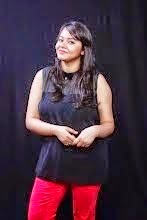
My photo
Hello folks. I am Priyanka and you are on my blog right now (which makes me super happy)! I work as a senior fashion journalist with the biggest newspaper in the country and this blog allows me to voice my ever-elusive love for everything fashionable and beautiful in life (in my free time that is). It all started while I was studying literature during my graduation, I realised how much I enjoy writing; which led me thinking, journalism would be my perfect career match. I started off with internships at fashion magazines and newspapers and developed a flair for lifestyle writing. My love for fashion, beauty, style and trends, food, et cetera only increased by leaps and bounds after I enrolled for my masters in journalism. And since then I have been meaning to have my very own blog, wherein I could share my insights and connect with like minded readers!
Showing posts with label fabrics. Show all posts

Thursday, July 17, 2014

Shree Raj Mahal Jewellers India Couture Week 2014-Day 2

Ashok Goel, Kangana  Ranaut, Anju Modi and Pardeep Goel


Designer Anju Modi opted for ethnic gold from Shree Raj Mahal Jewelers for her show at the India Couture Week 2014 on day 2! Elaborate bridal chokers and kadas in modern designs and earrings in ethnic and traditional gold flaunted the dexterity of Indian craftsmanship and spoke of the lavishness of Indian weddings. Modi creatively paired neck pieces around models’ hair, which added glam to the outfits; these neck pieces can also be worn as kamarbandhs. The intricate work on the fabrics, imperial cuts and stately silhouettes made these bridal-wears a big hit!
 
Noyonika Chatterjee

Shree Raj Mahal Jewellers India Couture Week 2014-Day 2


Nimrat Kaur, Rina Dhaka and Malaika Arora Khan with models

Inspired by the iconography of gota work of Rajasthan, designer Rina Dhaka takes her designs to a whole new level this time at the India Couture Week, day 2! Her outfits look regal with undertones of her matchless aesthetics and soft sensual appeal. In her latest collection, the designer has re-created a new sense of style for the gota patti work, placed delicately, contouring sequined sheers and lace. Her designs surfaced convoluted embroidery elements from Rajasthan and Uttar Pradesh, laid lovingly in a lace like manner.

Techniques of zardozi, kamdani, ari and lace and metallic gota have been juxtaposed with tonal beading and soft embroidery to create a saga of romance. Gota patti and zardozi are set against lace backdrop, contrasted by Mughal animal paintings, depicted on fur-lined velvet capes.

Wednesday, July 16, 2014

Shree Raj Mahal Jewellers India Couture Week 2014-Day 1


Rani Mukherjee at the show
Sabyasachi Mukherjee opened Shree Raj Mahal Jewellers India Couture Week 2014 in association with Logix group at hotel Taj Palace, New Delhi. Kolkata’s wonder boy, Sabyasachi, known for his eclectic mix of grandeur with art in his impeccable creations, left the audience spellbound with sheer luxury and unabashed glamour. The captivating ensembles, rich embroidery work and royal fabrics made this whole experience absolutely celebratory. “I have had a very good association with FDCI and I am very privileged to be starting the Shree Raj Mahal Jewellers India Couture Week again,” smiles Mukherjee.

His khadi and tulle sari, tea dyed and embellished with zardozi, parsi and hand-cut bugle beads was simply brilliant! Other magnificent, eye-catching deigns include, the Gabardine bandhgala and trousers with bullion thread-work detail, embellished with 18 carat gold buttons, the hand-block printed canvas bandhgala, crystal-embellished poplin kurta and gharara paired with khadi and tulle dupatta and the heavily embellished canvas lehenga paired with khadi blouse and pashmina shawl.


Models donning Sabyasachi's designs
Sunil Sethi and Rani Mukherjee with Sabyasachi
Carol Gracias in Sabyasachi
Erika Packard in Sabyasachi
Pia Trivedi in Sabyasachi


A sneak-peak into the luxurious Fall/Winter collection by Snesha Designs


Formed in 2014, Snesha designs is the brain child of Sneha and Shahin, who have taken baby steps into the world of fashion. Their forte lies in contemporary Indian and Western wear with undertones of luxurious prêt coupled with thier distinctive house signature and an inherent Indian-ness that celebrates handcrafted traditions.
 
Their Fall/Winter collection brings forth a symphony of sheer elegance, coupled with femininity and romance. The collection reflects a wonderful melange of gold, tangerine, peaches, hues from the rosy palette, Sufi whites and subtle hints of neon accents. 

The fabrics used are light-weight silks, georgettes, nets, chiffons and muls rich in embroidery and gota work. Simple silhouettes and classic cuts makes this collection stand out. These bright, urban ensembles have a compelling old-world charm to them. Enjoy their luxe tropical-inspired outfits in tangy shades--be it the capes or the stoles, the collection symbolises eddy prints in youthful palettes. So, while you try their pure pashmina capes with detailing on the shoulders, you might also want to pick a pashmina with 3D embroidery work! Capes in silk are also worth a try!

Their creations are chic, glitzy and sophisticated. The cuts and styles speak of sheer hard work and superb craftsmanship. So go on ladies and grab your pick!

Tuesday, July 15, 2014

The fashion architect--Kiran Uttam Ghosh's designs are beyond pragmatic prêt. With an unconventional urge to create a sense of balance between traditional and modernist quintessence, she constantly thrives to take perfection to newer bounds


Kiran Uttam Ghosh's A/W'14 collection
Kolkata-based designer, Kiran Uttam Ghosh confronts the very notion of categorization. Being present in eight countries, Ghosh’s designs are understated with silhouettes and distinctive textures that snub to be allied by any particular school of fashion philosophy.  Her work emphasises on the metaphysics of detailing, which was imparted to her by her mentor, Jasper Conran. Today, her couture line epitomizes an enduring classic appeal, wherein she casts newer dimensions to all her clothes. 


Tell us about your Autumn/Winter'14 collection…
My Autumn/Winter collection is inspired by Paisleys—Paisleys as embroidered cut-work necks, textures, prints and neck pieces. One can see layered silhouettes that are long and lean, often with shorter fronts and long backs; also, metallic and bling neck pieces have made a mark. The key pieces to look out for are sheer pants with embroidered hem details and cut work armholes. This collection is about separates—to connect with varied generations and to wear on different occasions. For example, a gold pleated wrap jacket can be worn over a sari or over shorts, paired with a tee or with a choli

What colours and prints will be in vogue this season?
Metallics, like, gold, bronze and silver will work well adding drama and support to colours like rich red, ivory, deep purple, teal and emerald. As far as prints are concerned, enlarged paisley prints will rule the season. 

What textiles and silhouettes will be creating buzz in the fashion circuit?
Silhouettes that are shorter on the front with longer backs will be trending. Furthermore, vertical paneled pieces with sheer and opaque offsetting each other will be in vogue. As for textiles, I feel pressed pleats in gold, bronze and silver will be hot favourite. Pleats in short colours of teal, deep purple and gold will have a fashion moment too! 

What according to you are the topmost fashion trends this year?
I’m not a trends person at all. I follow what I feel like wearing. I like my clothes to be passed on as heirloom pieces. Nothing makes me happier than a mother telling me how her daughter wore her clothes on her wedding day. Having said that, I think sheer pyjamas with bright traditional embroidered hemlines are a great way to present traditional workmanship with a global silhouette. These can easily be worn with a tee, a shirt or a gherdaar—from evening wear to a mehendi ceremony or a wedding reception.

What are your views on deconstructive silhouettes and unisexual fashion?
Androgyny is my forte. There is nothing like a man’s white shirt on a woman’s petite figure. I love borrowing from a man’s wardrobe. At the same time I love pastels, saris, kurtas and sheers. Being a woman in fashion today is amazing. We can have the best of both worlds.  

What is your fashion philosophy?
Keeping it simple is my mantra. I often see an ensemble and feel I can make five out of one. ‘Edit’ is my favorite word. While I love many layers, I also love when one can wear it as separates. Fashion is one of the few applied arts with a commercial aspect to it. I believe it’s a balance between the two worlds that can make it all come together.  It’s this balance that I strive to achieve. What I present at my show, my buyers and stores should want to buy.

What is your take on changing consumer tastes?
The only 'constant' in fashion is change. At the same time, there are classic timeless pieces that are beautiful and should remain the way they are. It’s the poise between the two that one needs to achieve. 

Monday, July 14, 2014

Replicating Society--Designer Urvashi Kaur believes, fashion is nothing but a mirror to the society, reflecting its nuances in the most honest way


Urvashi Kaur (center)
Fashion designer Urvashi Kaur is known for her sharp interest in various types of fabrics and colours. She yearns to harvest fresh ideas pertaining to the present socio, economic and cultural status of the contemporary society through her designs. She thrives on the zest to constantly experiment with different facets of fashion by bending genres; and the final outcomes are always enthralling.

Motivated to revitalize the country’s effervescent textiles, Kaur blends the spheres of ethnic with the modern, which leads her to earn critical applause and a venerated league of clientele for her designs. She is also known for developing relationships with many NGO’s by generating and offering employment opportunities to women and endorsing the improvement of handloom fabrics.

What inspires your designs?
My last collection, titled 'Semah' has been inspired by the three unified states of human nature — the mind (as knowledge and thought), the heart (through the expression of feelings, poetry and music) and the body (by activating life). It is Sufi in its deepest of essence.  

What is your design philosophy?
My design beliefs are all about thinking globally but acting locally.

What does your creation reflect?
My creations in this collection reflect the Sufi traditions across the globe through its art and culture. 

What new techniques and materials are you using?
The techniques in this collection involve engineered placements of twisted tie/dye that evoke Bandhej. Mosaic styled geometric patterns derived by hand block prints paired with pleating techniques also surfaced in my work. I have also used shell buttons and wooden beads on the versatile separates with touches of volume and movement in drapes that set a dramatic rhythm.

What does fashion mean to you?
Fashion to me means evoking a sense of simplicity and still being stylishly smart that catches the eye without trying too hard. My collections could be worn by anybody as it has fluidity, movement and ease in it. 

How has the Indian fashion industry shaped your outlook towards fashion?
More than the fashion industry, it is the indigenous handlooms, weaves and textiles of India that have inspired me, along with numerous techniques that find expression in our traditional costumes such as hand tucking, rouching, tie and dye, block printing etc. The silhouettes in my collection are also inspired from Indian traditional silhouettes but have been modified for a more universal market.


What’s in the pipeline for your fans?
Many prominent online collaborations such as ‘Pernia’s pop up’ and tie ups with new stores in India and abroad such as ‘anthropology’ are in the pipeline for my fans .The brand is increasing its presence pan-India as well as in the international daises like in Japan and the US. We are also increasing our presence in the Middle East.


Who is your favourite model?
It is very difficult to name one favorite model. However I would like to name a few like, Preeti Dhata, Laxmi Rana and Sonalika Sahay.

Any fashion brands that you really adore?
The international brands I adore are Mary Katrantzou, Serbian label Roksanda Ilincic and Peter Pilotto. I admire the French label Celine (Céline Vipiana) and Stella McCartney too.  Greco-Austrian Marios Schwab, Vivienne Westwood, Roland Mouret and Alexander McQueen are my favourites too. In India I am a fan of Rajesh Pratap, Payal Pratap, Abraham and Thakore, Pankaj and Nidhi, Pero, AM:PM, Cell Design and Gaurav Jai Gupta to name a few.

Tell us about your personal style.
Eclectic is the word that describes my personal style most aptly.

What fashion trends do you foresee for the upcoming months?
For the upcoming months the fashion trends I foresee are prints, pleats, sheer, checks and stripes, whites and minimalism.

Who wears your collection?
My collection is very commercially viable as it is affordable and easily wearable. Recently Neha Dhupia, Nandita Das, Dia Mirza, Tisca Chopra, Gul Panag and singer Sonal Kalra have all taken to the brand. 


Way back when you were a student, what inspired you? How did you decide upon this career?
Rohit Khosla inspired me as a designer. My mother who is an artist also inspired me greatly. Then my foray into theater was a defining moment and finally creating costumes for theater productions led me to choose fashion designing as a career. 
Saturday, July 12, 2014

The Eccentric Duo--Designer duo, Dev R Nil are known for their whimsical designs. Their capricious outfits, which are edgy, quirky yet very chic has breathed freshness into the realm of unisexual fashion

Dev r Nil
Known for their intellectually stimulating plots and distinctively unconventional designs, designer duo Dev R Nil’s work has always had abstinence. Their garments cast out freshness and callow whimsy in the rather stiff-lipped styling trade.

Tell us about your latest collection…
‘Love is a war for lives’ is the tagline for our latest collection, which was unveiled at the Will’s Lifestyle Fashion Week (WLFW) 2014. The love and affection in terms of sculptures, art and literature has now got replaced by rape and vandalism—such is the insecure times that we live in. This collection is a voice to the caged love and freedom of expression. We liberate ourselves from the mind and heart and celebrate life as God meant it to be.

Dev r Nil, WIFW A/W'14
What colours and prints will be in vogue this season?
Monochromes, surface embroideries, harsh geometric prints and few deliberately developed ‘unfinished’ prints will be interestingly mixed and layered to tell a story of forbidden love this season. The look that’s severe, cold yet vulnerable with its softness is what we should seek for in the upcoming months. The indifference of the grey and monochromes will be warmly hugged by turquoise blue, cherry red, canary yellow and mint blue.

What textiles, textures and silhouettes will be creating buzz in the fashion circuit?
Interplay of softness of chiffon and georgette juxtaposed with severity of leather and the formality of the special fabric developed with metallic thread embroidery will be in rage. The patterned prints of roses and scattered roses, the geometric monochromatic prints, the female form incorporated and disintegrated ‘love’—all will come together in unison.  The point of focus comes alive in the signature ‘Dev r Nil’ prints and the cutworks and appliqué techniques used on leather and other fabrics will create magic. Embroidered jackets, coat dresses, shirt dresses, leather tops and double-breasted long jackets keep the look chic and feminine. A special accessory line of bags, hold-alls, clutches, messenger-boy bags and man bags add to the story of search of freedom from the censorship imposed by the society, peer group, religion and more.

What according to you are the topmost fashion trends this year?
We believe wearing non-labeled clothing is a top trend for the year—clothing that will not scream-out-loud a label, rather will compliment one’s personality. Trends come and go but finding classics, is the toughest.

What are your views on unisexual fashion?
As far as unisexual fashion is concerned, we have been creating clothes for our own personal wear, which ends up being preferred by both the sexes. There was no conscious decision of making them unisexual, but the idea of blurring the gender divide through clothing is very powerful in itself. So we continue designing clothes and prints, which obscures these lines.

Dev r Nil, WIFW A/W'14
What is your take on the business dynamics of Indian fashion?
The Indian fashion industry, with its talent, craft, textile and business sense, is luring the international fashion world with a certain sense of vengeance; there’s no denying that the Indian fashion industry and designers have managed to impact the fashion orbit, all across the world. We have not only impressed the world with power, style and sensibility, but the country has a great understanding of the business dynamics of this colossal international industry. All over the world, Indian ethnic designs and materials are considered as a significant facet for fashion houses and garment manufacturers, so you can clearly judge where we stand.

What is your fashion philosophy?
One thing we definitely know is that misery and sadness doesn’t inspire us. Human spirit, happy memories, travel experiences or even inanimate objects like a broken wall with a banyan tree (incidentally that’s the name and inspiration of our first collection) can spark a whole lot of images in our heads. We are affected by daily lives, the socio-economic climate as well as stories, which transport us to a different world all together.

The Designer Who Needs No Introduction--Manish Malhotra's designs and aesthetic values have put him on a pedestal higher than ever. Let's take a sneak-peak into his world of fashion and luxury


Manish Malhotra with Kajol and Karishma Kapoor
From designing for the divas of Bollywood, to decking up real life brides, designer Manish Malhotra has carved out a niche for himself in the topography of fashion and luxury industry in India and abroad. He speaks about his core concepts of building up a luxury brand and how to sustain in a cut-throat competitive world.

What’s the most fashionable Bollywood film till date?

I feel Dil Chahta Hai, Student of the Year and Yeh Jawaani Hai Deewani in the last two decades and Pakeezah from the 1970s are some of the most fashionable films produced by the Indian film fraternity.

When did you realise that being a designer is your true calling?

I always knew I wanted to be an artist. The thought of designing came in eventually though.

Tell us about your first break in Bollywood?

My first break in Bollywood happened in 1986 with the movie Swarg.

Madhuri Dixit in Manish Malhotra
Brides or Bollywood – what gives you more creative satisfaction?

They both have equal importance in my life. I am a costume designer and a fashion couturier. I started my career with styling. The movies that I style for are always very character driven, whereas for bridal-wear, I keep the needs of the consumers in mind.  I visualize the woman who will be wearing my outfit while designing my bridal pieces, but in movies it is more character-centric styling, so I have to think of the character and the actor playing that particular role. However, in both the areas I have to be creative. Yes, they are all inter-connected and I always follow my creative instinct, whether it is for styling or designing, everything else falls in place gradually.

You introduced the concept of showstoppers here – what are your thoughts on it? Who’s your favourite showstopper?

For me, it all started with my first collection where my dear friend, Urmila Matondkar was my muse for that show. I started the concept of showstopper very unintentionally in order to bring some element of newness and today it has become a trend, followed by one and all. I think showstoppers in my shows, rather than taking away all the limelight, always add a little more character to my designs.

Where do you think the Indian fashion industry is headed?

The Indian fashion industry today is headed to a great scenario of globalization with Indian styles becoming the new International ramp looks. For example, the admiration for this classic bandhgala is evident worldwide. The bandhgala is one of those few Indian silhouettes that have found international acclaim. Giorgio Armani has been making them for some time now, Canali has come up with the ‘Nawab Jacket’, and the modernised versions by Tom Ford and Paul Smith are helping the brands establish themselves in India.
Manish Malhotra with Kareena Kapooor

What has been the biggest change in the Indian Fashion Industry?

The fashion industry in India has evolved beautifully, particularly in the last 20 years. Boundaries of the industry started to expand, like the West learning that India is glamorous, and that the sari is the most sensuous garment in the whole wide world. Men have now embraced pink overcoming the stereotypical thinking; an anarkali is as stylish as an evening gown. We see a lot of celebrities embracing our Indian culture like the bandhgala Jacket and the sari at various international events. Many such examples tell us the story of an evolving fashion industry.

What advice do you have for designers breaking into the industry?


Just do what you love, be passionate about your work, it will take you places.

Advocator of rural fashion--She is a textile revivalist. From upholding the philosophy of art from rural India to reproducing its artistic taste on her clothes, fashion designer Aneeth Arora is a multifariously talented designer

Aneeth Arora
Her approach towards fashion is instinctive and she would rather call herself an artist than a fashion designer. One of the most talented, young designers on the block, Delhi-based, Aneeth Arora has come a long way in the fashion industry. From witnessing dreary response from the spectators at her very first show in 2007 to opening up her new collection to a choc-a-block hall filled with fashion enthusiasts in 2014, cheering and celebrating her magnificent work, Arora dares to bend genres and yet carve out a niche in the realm of fashion.  

Her silhouettes are classy and understated; her relaxed and untailored approach to layering, capacious yet not overwhelming, casts a vintage look to her garments. Also, her colour palette that mostly comprises of muted hues like pale mustard, white, black, dark blue and beige makes her clothes look all the more sophisticated with powerful, under lying drifts of the rural spirit.

Fashion philosophy: when it comes to fashion, my ideologies are based on the belief that I should be able to emulate whatever I observe around me, which strikes a cord with my fashion sensibilities in a wearable form to people. I travel a lot of rural India and I am a very observant traveler. I try to absorb as much of local aesthetics as I can because I feel rural India is the real trend-setter and its gorgeous whimsicality has been my muse since time immemorial.

Changing consumer tastes: I am a firm believer of the fact that every single person has their very own fashion appreciation pattern. So, my only conscious attempt in the whole dynamics of ‘changing consumer taste’ is to provide clothes to people that will clout them to re-think their perceptiveness. I am not here to alter mindsets; I am just her to make an impact.

Latest on the rack:  My Fall/Winter collection truly lived up to the very essence of the season—for the very first time, every single garment is made of wool. We sourced wool from various corners of India, be it Kashmir or Kulu and the textile was hand-woven.  Also, we tied up with an Italian company to produce hand-made wool jersey for us. The modus operandi of this collection was to keep the tradition of hand-made craftsmanship alive by juxtaposing artisans and artistry from different corners of the world.

Business of fashion: I feel over the period of five years, people have become overtly sensitive towards age-old traditions and crafts of our country; not only in India, but on a global forum too, traditional techniques and art forms are being much appreciated. Since our foray is hand-crafted textiles, this has helped in putting us on a more comprehensive pedestal. This is the perfect time for brands like ours to grow and evolve.

Wearability vs. trends: Péro is all about wearable clothing; so we never really had to struggle to balance trends. We aim at culling out inspirational tales from rural India and portray them in our outfits; so the trends that come out, consequentially are always balanced.

Future plans: I take one day at a time and try to make the most of it. If, you ask me about the next collection, I would say, it’s an ongoing process and we are always working on the ‘next’ collection.

The brand essence: Péro means ‘to wear’ in Marwari. The brand symbolises and celebrates the beauty of traditional, hand-made Indian craft. Every piece that we make is touched by many artisans before they hit the racks. So, each garment is enthused with unique adroitness and taste. The main aspiration is to keep the roots alive.

The Péro woman: A woman who is very sensitive towards what she wears will wear my clothes. She would choose comfort over style and would want to feel the beauty of the garment; she would not pick up a garment just on face-value, but would pick up attires to know the hidden tales behind its birth. She would let the pieces interact with her. She would treat the whole experience in a poetic way.

Source of inspiration: I pick up strands of creativity from everything that I see; it could be good music or great food too. Small things on a rugged road to the torn weave on a road-side beggar—everything around me fills me up with vision and spark.

Favourite designers: I had interned with Abraham and Thakore and I love their take on textiles; the simplicity in their work, which results in procuring amazingly chic outfits, leaves me waiting for their next collection, always! I also look up to Sabyasachi Mukherji; the way he has done is branding is remarkable. Also, his ways of combining techniques is quite noteworthy too. I also admire Rajesh Pratap Singh.